
In an era where toxicity in gaming has become almost expected, Final Fantasy XIV stands as a remarkable exception. The massively multiplayer online role-playing game (MMORPG) has cultivated one of the most welcoming, supportive, and genuinely kind communities in the gaming industry. This didn't happen by accident. Through a combination of intentional game design, strict moderation policies, and carefully nurtured cultural norms, Square Enix created an environment where cooperation thrives and toxic gaming behavior is actively discouraged.
The contrast with other online games is stark. While many competitive titles struggle with hate in game chats, harassment, and anti-social gaming behavior, FFXIV players are known for their patience with newcomers, willingness to help, and generally positive attitudes. Understanding how this community developed offers valuable lessons for game developers seeking to combat online harassment in games and build healthier gaming environments.
The Foundation: Design Choices That Discourage Competition
At the heart of FFXIV's welcoming atmosphere lies a fundamental design philosophy: the game actively discourages the competitive mindset that fuels much of the toxic gameplay found in other MMORPGs. Unlike games where players compete for resources, quest objectives, or monster kills, FFXIV ensures that cooperation is always more beneficial than competition.
Shared Resources and Rewards
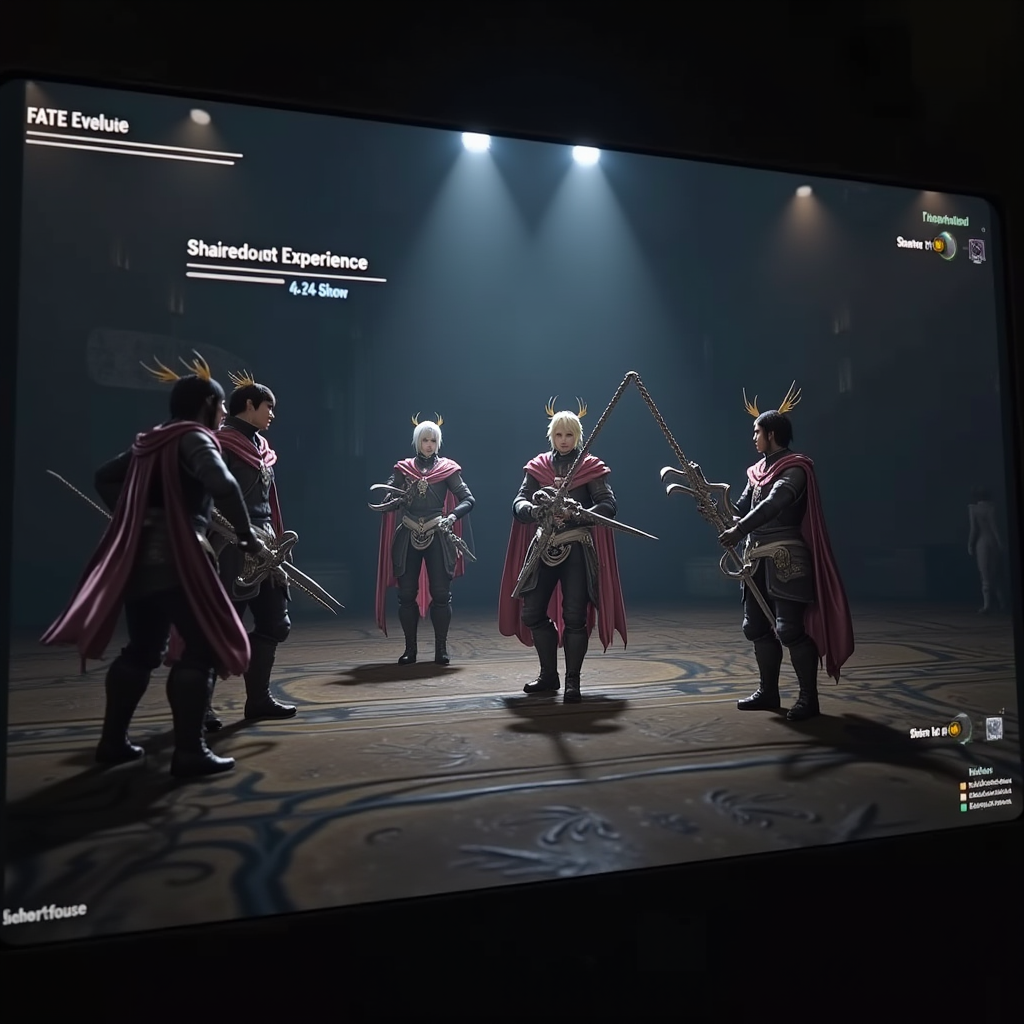
One of the most significant design decisions in FFXIV is the implementation of shared quest objectives and monster tagging. When a player attacks a monster, other players can join in and receive full credit and rewards, regardless of who dealt the most damage or landed the killing blow. This simple mechanic eliminates one of the primary sources of friction in MMORPGs: resource competition.
In traditional MMOs, players often race to tag monsters first, leading to frustration, arguments, and the development of toxic behaviors like "kill stealing." FFXIV's approach transforms potential competitors into allies. When you see another player fighting a difficult enemy, your instinct is to help rather than to compete, because helping them also helps you.
Key Design Principle: FFXIV's shared reward system means that another player's success never comes at your expense. This fundamental shift in game mechanics creates an environment where helping others is always the rational choice, laying the groundwork for a more cooperative community culture.
The Mentor System and Sprout Culture
FFXIV's approach to new players is another cornerstone of its positive community. New players are marked with a "sprout" icon next to their name, immediately identifying them to veterans. Rather than being a mark of shame, the sprout icon is treated with respect and patience by the community. The game encourages experienced players to become mentors, who receive special icons and access to a mentor chat channel where they can answer questions from new players.
This system creates a culture where helping newcomers is not just accepted but celebrated. Veterans remember their own time as sprouts and the help they received, creating a cycle of positive behavior that perpetuates itself across generations of players. The mentor system also provides tangible rewards for helpful behavior, including exclusive mounts and titles, further incentivizing positive community engagement.
Strict Moderation: The Zero-Tolerance Approach
While good design creates the foundation for a healthy community, enforcement is equally crucial. Square Enix has implemented one of the strictest moderation policies in online gaming, and they enforce it consistently. This approach to game moderation systems sends a clear message: toxic gaming behavior will not be tolerated.
The Terms of Service and Enforcement
FFXIV's Terms of Service explicitly prohibit harassment, hate speech, and abusive behavior. What sets the game apart is not just having these rules, but actively enforcing them. The Game Masters (GMs) investigate reports seriously and issue penalties ranging from warnings to permanent bans. Players who engage in online harassment in games face real consequences, creating a deterrent effect that shapes community behavior.
The reporting system is straightforward and accessible. Players can report harassment directly through the game interface, and Square Enix has made it clear that they review every report. This robust ban and report culture means that toxic players cannot hide behind anonymity or assume their behavior will go unnoticed.
"We believe that a welcoming community is essential to the FFXIV experience. Our moderation team works around the clock to ensure that all players can enjoy the game in a safe, respectful environment."
Consequences That Matter
The effectiveness of FFXIV's moderation stems from meaningful consequences. Unlike games where toxic players receive slaps on the wrist, FFXIV implements escalating penalties. First offenses might result in temporary suspensions, but repeated violations lead to permanent account bans. Given the time investment required in an MMORPG, the threat of losing years of progress is a powerful deterrent.
Importantly, the moderation team doesn't just react to extreme cases. They address microaggressions, passive-aggressive behavior, and subtle forms of harassment that other games might ignore. This comprehensive approach prevents the normalization of low-level toxicity that can gradually poison a community.

Cultural Norms: The Unwritten Rules of Eorzea
Beyond official policies, FFXIV has developed strong cultural norms that players enforce through social pressure. These unwritten rules create a self-regulating community where positive behavior is expected and rewarded, while negative behavior is called out and discouraged.
The "You Pull It, You Tank It" Exception
In dungeon content, there's an understanding about roles and responsibilities. While the community is generally forgiving of mistakes, there are certain behaviors that cross the line. For example, DPS players who deliberately pull extra enemies to force the tank to fight faster are generally frowned upon. However, even this is handled with communication rather than aggression. The community norm is to explain why the behavior is problematic rather than immediately resorting to insults or vote-kicks.
Patience with Learning
Perhaps the most striking cultural norm in FFXIV is the patience shown toward players who are learning. When someone makes a mistake in a dungeon or raid, the typical response is to explain the mechanic rather than to berate them. This patience extends even to repeated failures, with groups often spending significant time helping a single player understand a difficult mechanic.
This culture of patience is reinforced by the game's design. Many duties include a "first-time bonus" that rewards all party members when someone completes content for the first time. This means that experienced players are incentivized to help newcomers rather than avoid them, turning what could be a burden into an opportunity.
Community Insight: The FFXIV community has developed a saying: "Everyone was a sprout once." This simple reminder encourages empathy and patience, helping veterans remember their own learning experiences and treat new players with the kindness they once received.

The Role of Content Design in Reducing Toxicity
FFXIV's content structure plays a crucial role in maintaining its positive community. The game carefully balances challenge with accessibility, ensuring that difficult content exists for those who want it without creating an environment where elitism can flourish.
Multiple Difficulty Tiers
The game offers content at various difficulty levels, from casual story mode to extremely challenging "Savage" and "Ultimate" raids. This tiered approach means that players can engage with content appropriate to their skill level without feeling pressured to attempt content they're not ready for. Importantly, the story-critical content is always accessible to casual players, ensuring that everyone can experience the narrative without facing insurmountable challenges.
This design choice prevents the gatekeeping behavior common in other MMORPGs, where access to story content might be locked behind difficult group content. In FFXIV, even players who never touch high-end raiding can experience the complete story, reducing the pressure and frustration that often leads to toxic gaming behavior.
The Duty Finder and Party Finder Systems
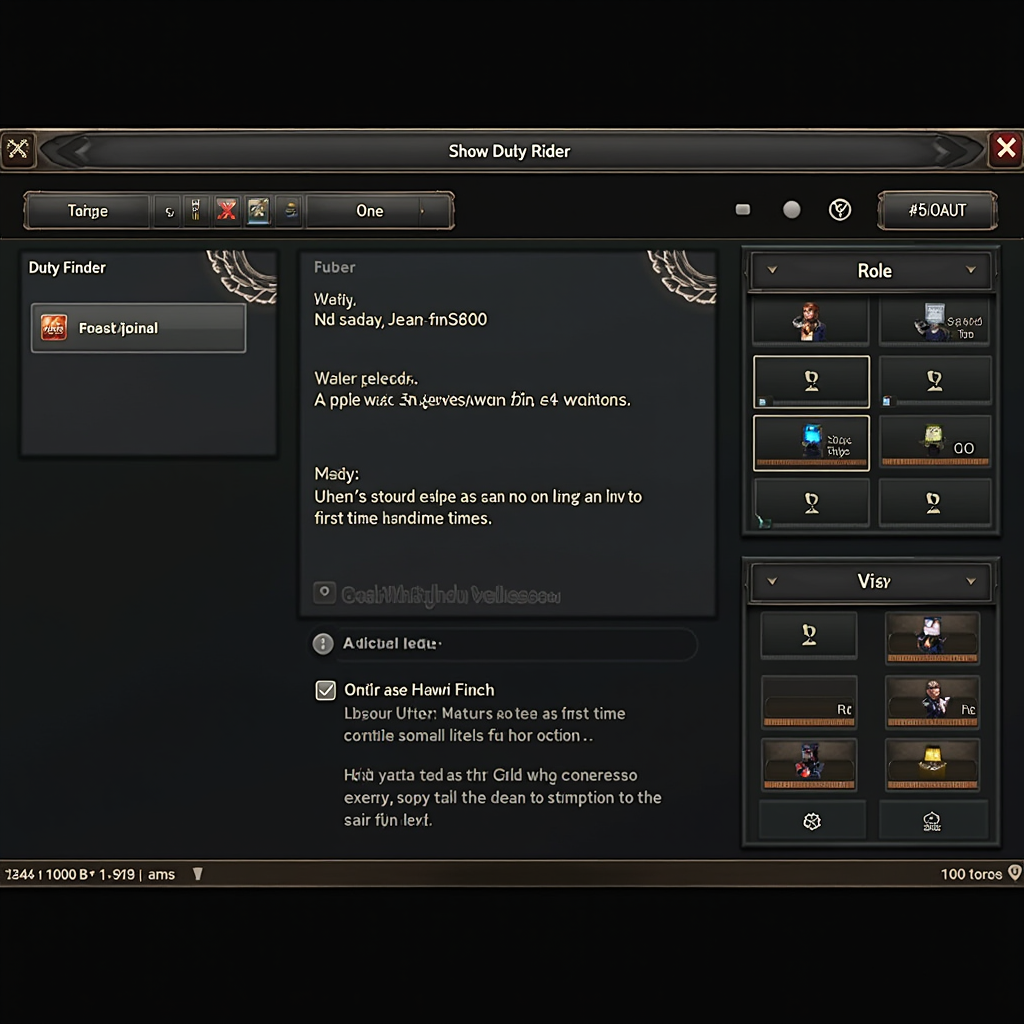
FFXIV's matchmaking systems are designed to facilitate positive interactions. The Duty Finder automatically groups players for required content, with built-in protections against abuse. Players cannot be kicked from a group without a majority vote, and there are cooldowns on initiating vote-kicks to prevent abuse. The Party Finder allows players to create custom groups with specific requirements, but the interface encourages clear communication about expectations upfront.
These systems reduce the friction that can lead to conflict. When expectations are clear from the start, and when there are safeguards against abuse, players are more likely to have positive experiences even when grouped with strangers.
Communication Tools and Limitations
Interestingly, some of FFXIV's positive community culture stems from what it doesn't have. The game lacks certain communication features that are standard in other online games, and these omissions are deliberate choices that reduce opportunities for toxic behavior.
No All-Chat in PvP
Unlike many competitive games, FFXIV's PvP modes do not include all-chat functionality. Players cannot communicate with the opposing team during matches. This simple limitation eliminates one of the primary vectors for PvP aggression and trash talk. Without the ability to taunt opponents or gloat about victories, the competitive modes remain focused on gameplay rather than psychological warfare.
Limited Public Chat Channels
The game's chat system is relatively limited compared to other MMORPGs. There's no global chat channel where players can broadcast messages to the entire server. Instead, communication is primarily local (within the same zone) or within specific groups and guilds (called Free Companies in FFXIV). This limitation prevents the spread of toxicity that often occurs in global chat channels, where a single toxic player can poison the atmosphere for thousands of others.
Quick Chat and Emotes
FFXIV provides a robust system of quick chat phrases and emotes that allow for communication without typing. These pre-set messages are generally positive or neutral, making it easy to express gratitude, acknowledge others, or coordinate without the risk of miscommunication or hostile language. The game's extensive emote system also allows for non-verbal communication that tends to be more playful and friendly than text-based interaction.
The Economic System and Reduced Competition
FFXIV's economic design also contributes to its positive community by reducing the cutthroat competition that characterizes many MMO economies. The market board (auction house) system is designed to be accessible and fair, with measures in place to prevent market manipulation and price gouging.
Crafting and Gathering for Everyone
Unlike games where crafting is limited to specific character classes, FFXIV allows every player to level all crafting and gathering professions on a single character. This design choice means that players aren't locked into economic roles and can be self-sufficient if they choose. It also means that the crafting economy is robust and competitive in a healthy way, with many players participating rather than a small group controlling the market.
The game also includes numerous ways to obtain gear and items without engaging with the player economy at all. Quest rewards, dungeon drops, and tomestone vendors provide viable alternatives to purchasing from other players, ensuring that no one is forced to participate in economic activities they find stressful or unpleasant.

Lessons for Other Games: Actionable Insights
The success of FFXIV's community offers valuable lessons for other game developers struggling with toxicity in gaming. While not every game can or should copy FFXIV's approach exactly, several principles are broadly applicable:
Design Against Competition Where Possible
Games should examine their core mechanics to identify unnecessary sources of player conflict. Shared objectives, instanced resources, and cooperative rewards can reduce friction without sacrificing challenge or engagement. When competition is necessary for gameplay, it should be structured and consensual, with clear boundaries and expectations.
Invest in Moderation
Effective game moderation systems require resources and commitment. Automated systems alone are insufficient; human moderators who understand context and can make nuanced decisions are essential. The investment in moderation pays dividends in player retention and community health. Games that treat moderation as an afterthought will struggle to maintain healthy gaming communities.
Create Systems That Reward Positive Behavior
Rather than only punishing negative behavior, games should actively reward positive actions. Mentor systems, commendation features, and bonuses for helping new players can incentivize the behavior you want to see. When being helpful is rewarded, more players will choose to be helpful.
Consider Communication Carefully
Not all communication features improve the player experience. Developers should carefully consider whether features like all-chat in competitive modes or global chat channels actually enhance gameplay or simply provide platforms for toxic behavior. Sometimes, less communication is better communication.
Developer Takeaway: Building a healthy gaming community requires intentional design at every level—from core mechanics to moderation policies to communication systems. It's not enough to simply punish bad behavior; games must actively encourage and reward positive interactions while removing unnecessary sources of conflict.
Challenges and Limitations
While FFXIV's community is remarkably positive, it's not perfect. The game still faces challenges with toxicity, particularly in high-end raiding where the pressure to perform can bring out negative behaviors. Some players criticize the strict moderation as being too restrictive, arguing that it limits legitimate criticism or banter.
There's also the question of whether FFXIV's approach is scalable to other types of games. The game's primarily PvE focus and cooperative nature make it easier to foster positive interactions than in competitive PvP-focused games. However, even competitive games can learn from FFXIV's emphasis on clear rules, consistent enforcement, and designing systems that reduce unnecessary conflict.
The Balance Between Freedom and Safety
One ongoing debate within the FFXIV community concerns the balance between player freedom and community safety. Some players feel that the strict moderation creates a "sanitized" environment where genuine expression is stifled. Others argue that the restrictions are necessary to maintain the welcoming atmosphere that makes the game special.
This tension reflects a broader challenge in online gaming: how to create spaces that are both free and safe. FFXIV has clearly chosen to prioritize safety and inclusivity, accepting some limitations on expression as the cost of maintaining a welcoming environment. This choice won't be right for every game, but it's proven successful for FFXIV's target audience.

The Future of Gaming Communities
As the gaming industry continues to grapple with issues of online harassment in games and toxic gaming behavior, FFXIV's example becomes increasingly relevant. The game demonstrates that it is possible to build and maintain a large, active community that is genuinely welcoming and supportive. This isn't just good for players—it's good for business. FFXIV's positive reputation attracts new players and encourages long-term retention, proving that investing in community health is financially sound.
The rise of FFXIV's popularity, particularly during the 2021 content drought in competing MMORPGs, showed that players are hungry for positive gaming experiences. Many players who tried FFXIV specifically cited its reputation for having a welcoming community as a reason for giving the game a chance. In an increasingly crowded gaming market, a reputation for healthy gaming communities can be a significant competitive advantage.
Industry-Wide Implications
The success of FFXIV's community-building efforts has implications beyond MMORPGs. As more games incorporate online multiplayer elements, the lessons learned from FFXIV become relevant across genres. Whether it's a competitive shooter, a battle royale, or a cooperative survival game, the principles of designing against unnecessary conflict, investing in moderation, and rewarding positive behavior can improve player experiences.
Some developers are already taking notice. Recent games have implemented features inspired by FFXIV's approach, such as commendation systems, mentor programs, and stricter enforcement of conduct policies. While it's too early to judge the long-term success of these initiatives, the trend suggests a growing recognition that community health is a crucial aspect of game design.
Conclusion: A Model Worth Emulating
Final Fantasy XIV's welcoming community didn't emerge by chance. It's the result of deliberate design choices, consistent moderation, and carefully cultivated cultural norms. By prioritizing cooperation over competition, enforcing clear standards of behavior, and creating systems that reward positive interactions, Square Enix built an environment where kindness and support are the norm rather than the exception.
For other game developers, FFXIV offers a roadmap for building healthier gaming communities. While not every element of FFXIV's approach will translate to every game, the underlying principles are broadly applicable. Games that take community health seriously, invest in proper moderation, and design systems that encourage positive behavior can create environments where players feel welcome and supported.
As the gaming industry continues to evolve, the importance of healthy communities will only grow. Players are increasingly aware of the impact that toxic gaming behavior has on their enjoyment and mental health, and they're seeking out games that offer positive experiences. FFXIV proves that it's possible to build such experiences at scale, offering hope that the future of online gaming can be more welcoming, inclusive, and genuinely fun for everyone.
"The community is what makes FFXIV special. The game is great, but it's the people who keep me coming back. Knowing that I can log in and have positive interactions, whether I'm running a dungeon with strangers or just chatting in my Free Company, makes all the difference."

The story of FFXIV's community is ultimately a story about what's possible when developers prioritize player well-being alongside gameplay. It's a reminder that online spaces don't have to be toxic, that communities can be welcoming, and that with the right approach, we can build gaming environments where everyone feels valued and respected. As more developers learn from FFXIV's example, we can hope for a future where positive, supportive communities become the standard rather than the exception in online gaming.